Playground
Knocknarea
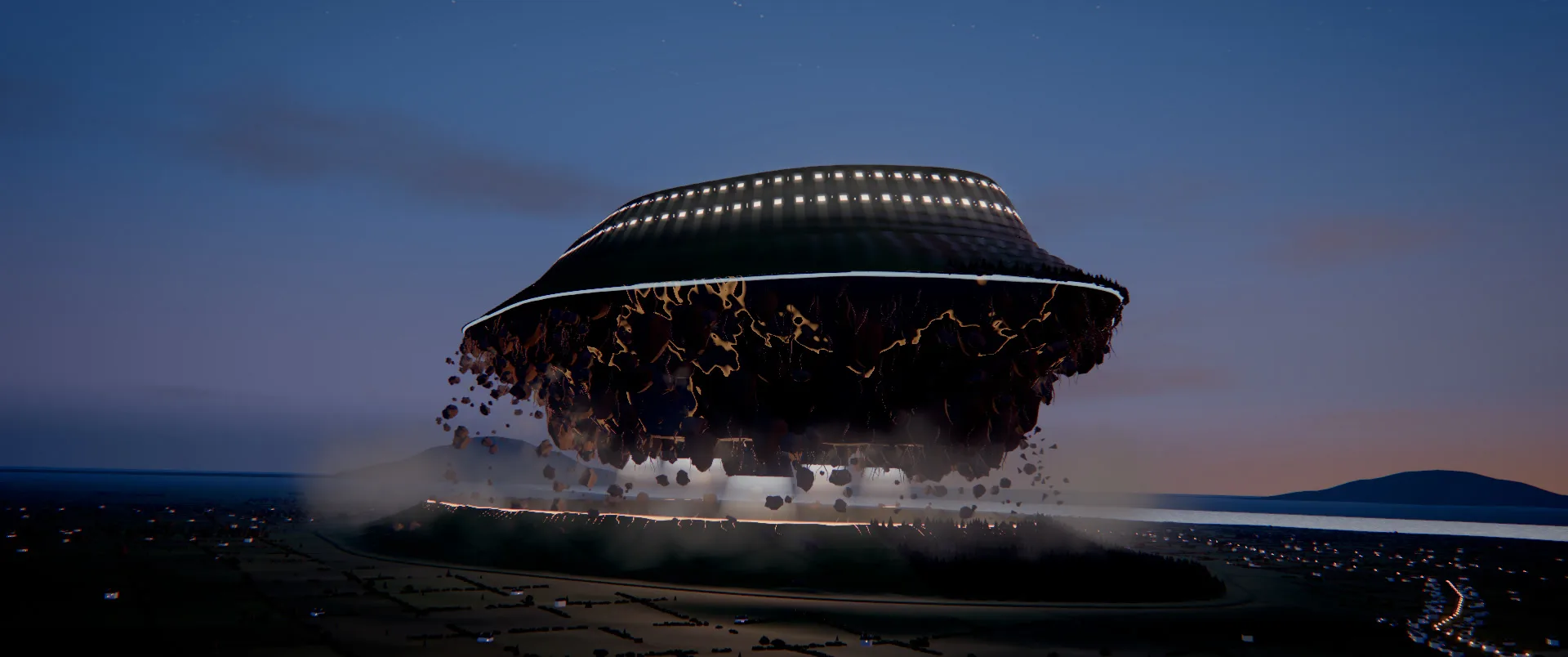
My local mountain wakes up as a buried spaceship and lifts off over Strandhill.
Explore the scene liveMore from the Playground
The live scene starts when you click, with sound. Click or press Space to pause and look around, and M mutes it. It's heavy, so it runs best on a laptop.
Where the idea came from
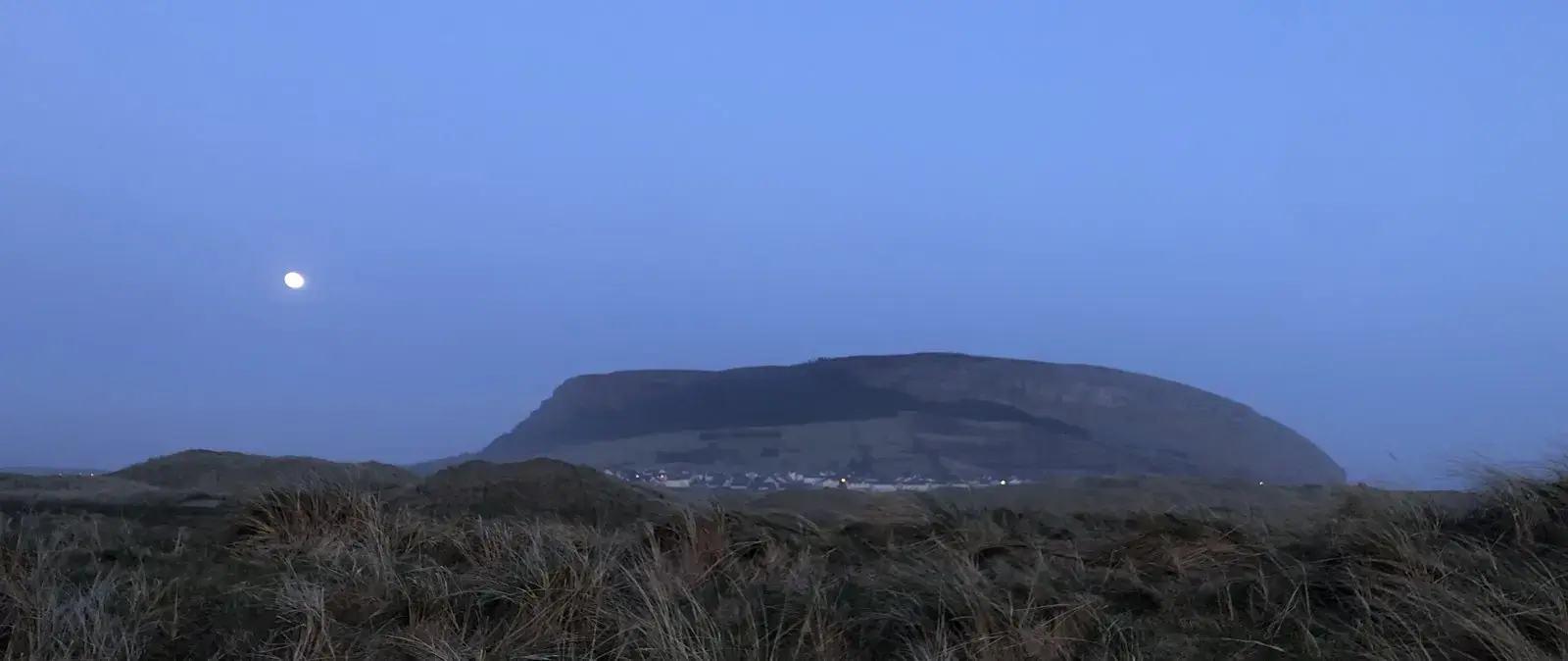
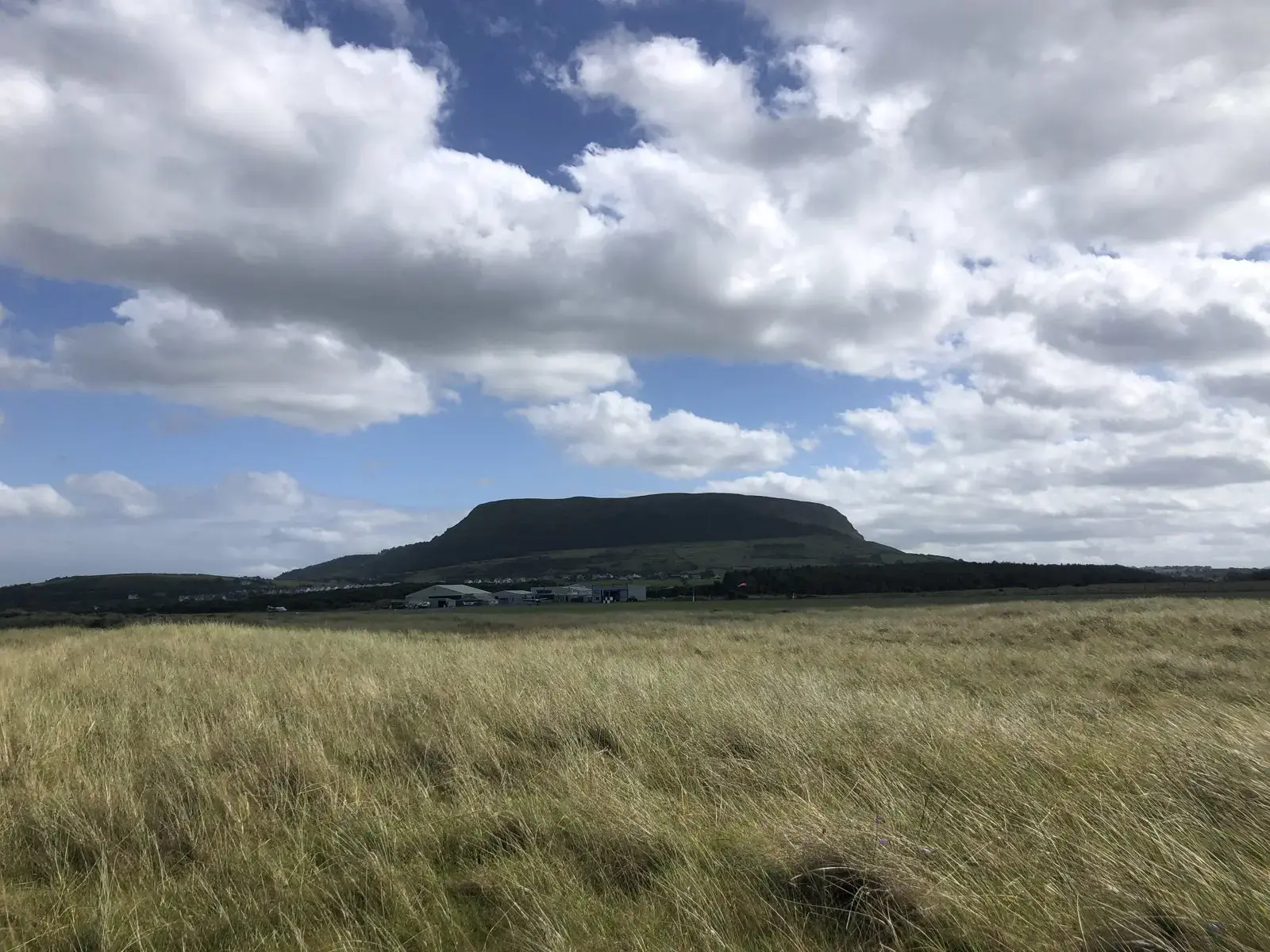
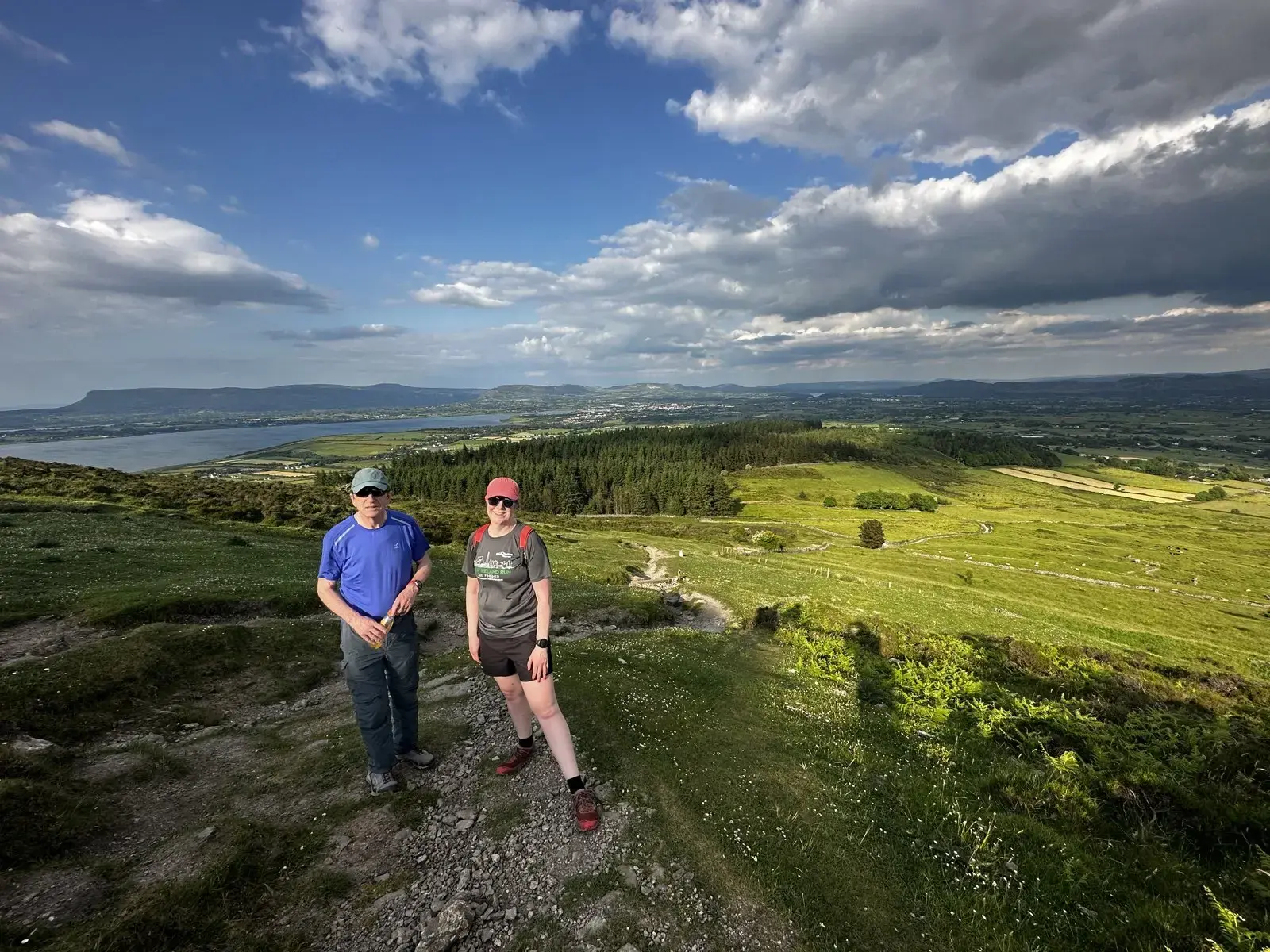
I love sci-fi and fantasy, and I've always thought Knocknarea has an amazing shape. That long, flat-topped mountain looks to me like it could be a buried spaceship. It's actually limestone, shaped by limestone fault lines. But I think it looks amazing, and that's where the idea came from.
How we made it
Everything you see is built in code, with Three.js. There's no 3D modelling software and no stock footage. Every value in a frame is worked out from the time, so any frame can be drawn exactly, and the film was rendered one frame at a time.
The sound is made in the browser too, with no recordings. Each portal switches on with a deep clunk that echoes back off the hills across the bay. The take-off is thirty voices gliding together into one low, dark chord, in the spirit of the sound tests that play before a film.
From first cut to final film
The first cut was filmed from out over the sea. The mountain was too tall and there were far too many lights. Then I sent my photos.
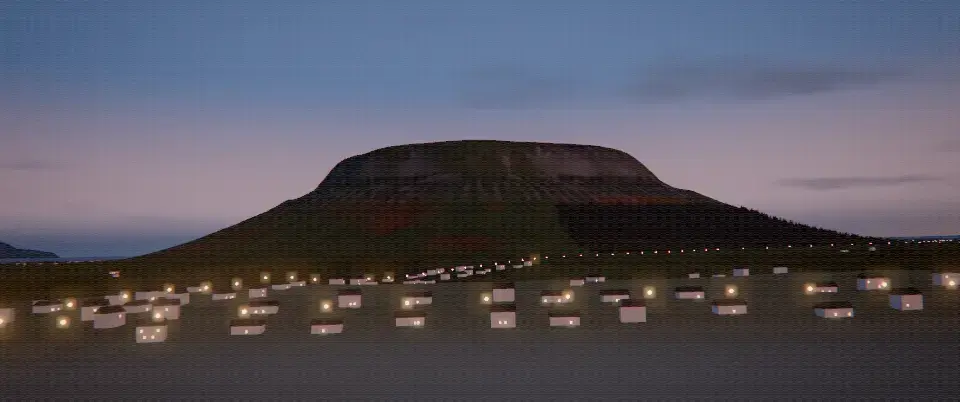
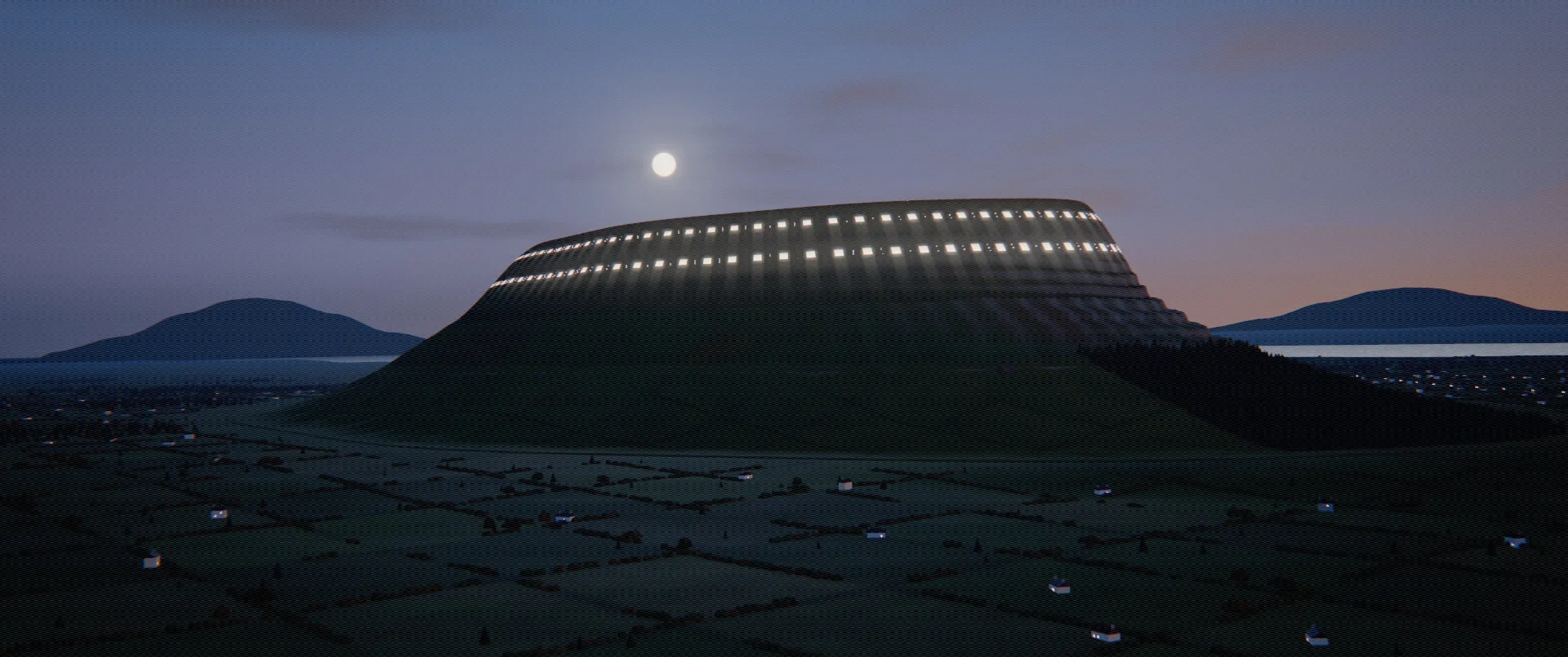
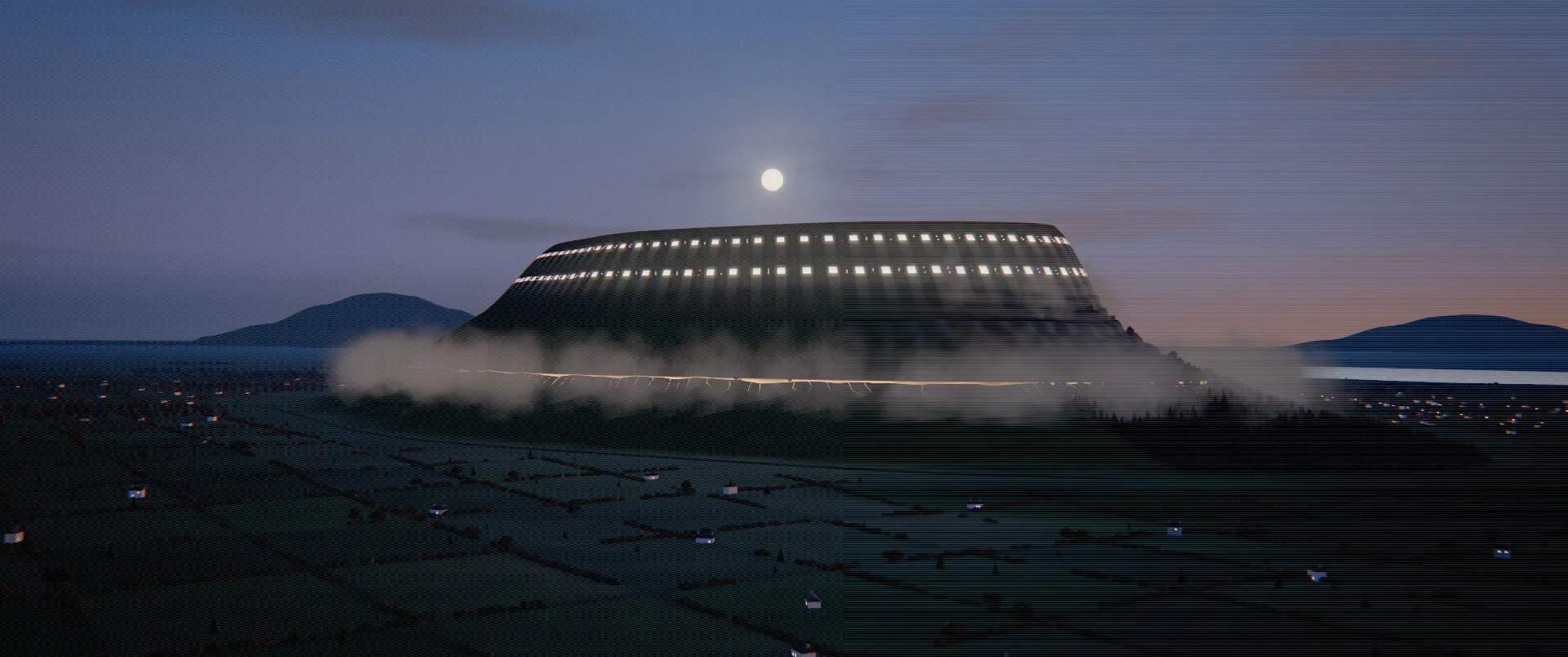
The rebuild uses the angle in my photos, from the dunes by Strandhill airfield looking south-east. It has the mountain's real long, flat-topped outline, with stepped limestone ledges at the west end, and the camera sits at about half the mountain's height. Two rows of portals switch on one segment at a time, all the way round. Only the steep core lifts: the top, the brow and the ledges. The long lower slopes stay behind as a ring around the pit. It ends hovering over Strandhill at blue hour, with the moon over its shoulder, like my moonrise photo.
A bug worth telling
The first renders came out completely black. One pixel of sky was doing maths on a tiny negative number, and that spoiled the reflections across the whole scene. The renderer I'd tested on first had hidden the problem.
Built in code with Claude Code and Three.js.